Source UV Protected Progressive Photochromic Lenses for Optics, Medical, Lighting
Compare 30 listings of UV Protected Progressive Photochromic Lenses featuring varying power ranges, diameters, and coatings. Buyers can evaluate options for optical, medical, and lighting applications with customizable specifications and delivery times.
Key considerations
Products List








Comprehensive Sourcing Guide
Strategic Sourcing Guide for UV Protected Progressive Photochromic Lenses
Procuring high-performance optical components requires a disciplined approach that balances technical specifications with supply chain reliability. For buyers targeting UV Protected Progressive Photochromic Lenses, the market offers a diverse array of options ranging from standard single-vision adaptations to complex multifocal solutions. This guide synthesizes observed product attributes and industry standards to provide a framework for evaluating potential suppliers and selecting the right optical components for specific applications. The focus remains on evidence-based criteria, ensuring that procurement decisions are grounded in verifiable data rather than marketing assertions.
Technical Specifications and Optical Performance
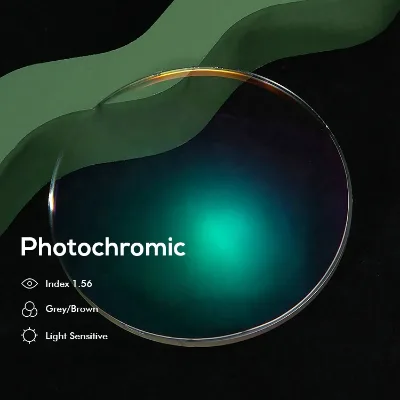
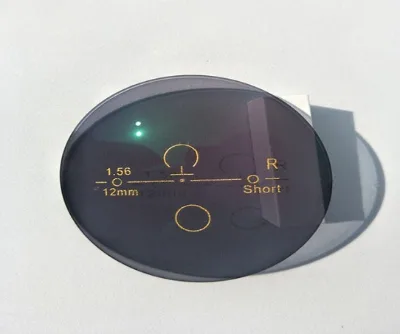
The core of any sourcing decision lies in the precise technical attributes of the lens. When evaluating UV Protected Progressive Photochromic Lenses, buyers must scrutinize the refractive index, Abbe value, and specific gravity, as these parameters directly influence visual clarity, weight, and durability. The available data indicates a refractive index of 1.56 for several models, which is a common standard for cost-effective resin lenses. However, the optical quality varies significantly based on the Abbe value, a critical metric for chromatic aberration control. Observed listings show Abbe values ranging from 36 to 42. A higher Abbe value, such as 42, generally suggests better color fidelity and reduced fringe effects, which is particularly important for progressive lenses where the wearer's eye moves across different power zones. Conversely, lower values like 36 or 37.5 may be acceptable for lower prescriptions but require careful consideration for high-power users.
Specific gravity is another vital specification for comfort, especially in larger frame sizes. The observed range of 1.16 to 1.28 indicates a variation in material density. A specific gravity of 1.16 suggests a lighter lens material, which is advantageous for reducing the weight on the nose bridge, while values around 1.27 or 1.28 indicate denser materials that might offer different impact resistance profiles. The power range is equally critical; listings confirm capabilities for spherical powers from -8.00 to +6.00 and cylindrical corrections up to -4.00. For progressive designs, the add power typically ranges from +1.00 to +3.00. Buyers must verify that the specific supplier's inventory matches the required power range, as some models are limited to Sph: -2.00 to +3.00, while others support broader ranges.
Material Composition and Coating Technologies
The physical composition of the lens determines its longevity and resistance to environmental factors. The predominant material identified in the supply data is resin, specifically noted as plastic photochromic lens material. This material choice is standard for its balance of weight and impact resistance. The base curve, observed at 2C, influences the curvature of the lens and its compatibility with various frame types. A 2C base curve is generally versatile but must be matched to the frame's design to ensure proper fitting and minimize distortion.
Coating technology is a decisive factor in the performance of photochromic lenses. The data highlights several coating choices, including HMC (Hard Multi-Coating), UC (Ultra Coating), HC (Hard Coating), and SHMC (Super Hard Multi-Coating). HMC is frequently cited, often associated with anti-reflective properties that enhance light transmission. One specific listing notes a transmission rate of greater than 97%, a figure that buyers should request verification for, as high transmission is essential for clear vision in low-light conditions. The photochromic element itself is designed to transition from clear to grey, with some listings specifying "Photogrey" as the color variant. The durability of this transition and the coating's resistance to scratching are paramount; therefore, verifying the specific coating process (e.g., HMC) and its application method is essential before finalizing a purchase.
Compliance, Certification, and Regulatory Standards
In the global optical market, compliance with international standards is non-negotiable. The observed product data lists CE and ISO certifications, which are critical indicators of adherence to safety and quality management systems. CE marking indicates conformity with health, safety, and environmental protection standards for products sold within the European Economic Area, while ISO certification suggests a commitment to standardized quality management processes. Buyers must explicitly request current certification documents for the specific models they intend to purchase, as certification status can vary by production batch or factory line.
Beyond general certifications, specific product standards must be checked. The data references "Spherical" and "Aspherical" standards, indicating that the lenses are manufactured to meet specific optical design criteria. Aspherical lenses, in particular, offer flatter profiles and reduced peripheral distortion, which is beneficial for progressive designs. However, the exact standard numbers (e.g., ISO 14889 for ophthalmic lenses) should be verified directly with the supplier. Additionally, the "prod_standard" field suggests that lenses are categorized by their optical design, and buyers should ensure the supplier can provide test reports confirming that the lenses meet the stated standards for UV protection and photochromic transition times.
Cost Drivers and Procurement Parameters
Understanding the cost structure of progressive photochromic lenses is essential for budgeting and negotiation. The observed price range in the market spans from $0.10 to $20.00 USD, a wide variance that reflects differences in Abbe values, coating complexity, and brand positioning. Lower-priced items often correspond to standard 1.56 index lenses with basic HMC coatings, while higher prices may reflect premium materials, higher Abbe values, or specialized aspherical designs.
Minimum Order Quantity (MOQ) is another significant cost driver. The data shows an MOQ range from 1 pair to 5,000 units. This flexibility allows buyers to test the market with small orders or scale up for bulk procurement. However, the unit price often decreases as the order volume increases. Buyers should note that some listings specify an MOQ of 1 pair, which is ideal for sampling, while others may require larger commitments. Packaging also influences logistics costs; options include cartons and envelopes, and the choice of packaging should align with the fragility of the lenses and the shipping distance. Delivery times are observed to be between 15 and 30 days, a factor that must be integrated into the supply chain planning to avoid stockouts.
Supplier Evaluation and Quality Assurance
Selecting the right supplier requires a rigorous evaluation process that goes beyond the initial product listing. The geographic origin of the products is consistently listed as China, with specific mentions of Jiangsu as a place of origin. While this provides a baseline for logistics, buyers should verify the specific factory location and capacity. A supplier with a physical presence in a known optical manufacturing hub like Jiangsu may offer better quality control and faster communication.
Quality assurance should be a central part of the supplier evaluation. Buyers must inquire about the guarantee period, which is observed to be between 3 to 5 years. This warranty period is a strong indicator of the manufacturer's confidence in their product's durability. However, the terms of the guarantee must be clearly defined: does it cover coating delamination, frame breakage, or manufacturing defects? Furthermore, the customization capabilities of the supplier are a key differentiator. The data confirms that customization is available, allowing for tailored solutions such as specific base curves, tints, or packaging. Buyers should assess the supplier's ability to handle custom orders without compromising on the standard quality metrics like transmission rates or UV protection levels.
Applications and Long-Term Procurement Strategy
The versatility of UV Protected Progressive Photochromic Lenses makes them suitable for a wide range of applications. The observed usage categories include Optical, Medical, and Lighting, indicating that these lenses are not limited to standard eyewear but can be integrated into specialized optical instruments. For the general consumer market, the primary application is vision correction for presbyopia and myopia, with added benefits of UV protection and photochromic adaptation to light conditions. The power range supports users with significant refractive errors, making these lenses suitable for a broad demographic.
For long-term procurement, buyers should establish a relationship with suppliers that offer consistent quality and reliable lead times. The variability in specifications, such as the different Abbe values and specific gravities observed, suggests that a single supplier may offer multiple product tiers. Buyers should develop a strategy to standardize their orders on specific models that meet their quality requirements while maintaining flexibility to switch models if market conditions change. Additionally, the availability of different lens colors, such as grey and clear, allows for product differentiation in the end market. By focusing on suppliers with robust certification, clear warranty terms, and flexible customization options, buyers can secure a stable supply chain for high-quality optical components.
Summary of Key Product Attributes
To facilitate quick reference during the sourcing process, the following table summarizes the critical attributes observed in the market data for UV Protected Progressive Photochromic Lenses.
| Attribute Category | Observed Specifications | Sourcing Verification Requirement |
|---|---|---|
| Material | Resin (Plastic) | Verify material safety and impact resistance reports. |
| Refractive Index | 1.56 | Confirm index matches design requirements. |
| Abbe Value | 36, 37.5, 42 | Select based on desired chromatic aberration control. |
| Specific Gravity | 1.16, 1.27, 1.28 | Calculate weight impact for large frame sizes. |
| Coating | HMC, UC, HC, SHMC | Request coating durability and transmission data (>97%). |
| Power Range | Sph: -8.00 to +6.00; Add: +1.00 to +3.00 | Ensure supplier inventory covers required prescription. |
| Certification | CE, ISO | Demand valid, current certification documents. |
| Guarantee | 3 to 5 Years | Review warranty terms for coating and material defects. |
| Lead Time | 15-30 Days | Plan inventory levels accordingly. |
| MOQ | 1 Pair to 5,000 Units | Negotiate based on order volume and price tiers. |
By adhering to these evidence-based guidelines, buyers can navigate the complexities of the optical lens market with confidence, ensuring that the procured UV Protected Progressive Photochromic Lenses meet both technical and commercial objectives.
FAQs
What is the typical Abbe value for these lenses?
The Abbe value ranges from 36 to 42 depending on the specific model. Higher values like 42 offer better color fidelity, while lower values around 36 may be suitable for lower prescriptions.
Can I customize the lens specifications for my needs?
Yes, customization is available for these lenses. Buyers can request specific base curves, tints, or packaging options while maintaining standard optical performance metrics like UV protection.
What is the minimum order quantity for purchasing?
The minimum order quantity ranges from 1 pair to 5000 units. This flexibility allows buyers to test the market with small orders or scale up for bulk procurement needs.
How long does delivery typically take for these lenses?
Delivery time is observed to be between 15 and 30 days. Buyers should plan their inventory levels accordingly to avoid stockouts during the procurement process.
Which certifications do these lenses typically hold?
The lenses typically hold CE and ISO certifications. Buyers must request current certification documents for specific models to ensure adherence to safety and quality management systems.
What is the power range available for these lenses?
The power range supports spherical powers from -8.00 to +6.00 with cylindrical corrections up to -4.00. Add power typically ranges from +1.00 to +3.00 for progressive designs.
What material are these progressive lenses made from?
These lenses are predominantly made from resin, specifically noted as plastic photochromic lens material. This material offers a balance of weight and impact resistance for daily use.